How does Solar work?
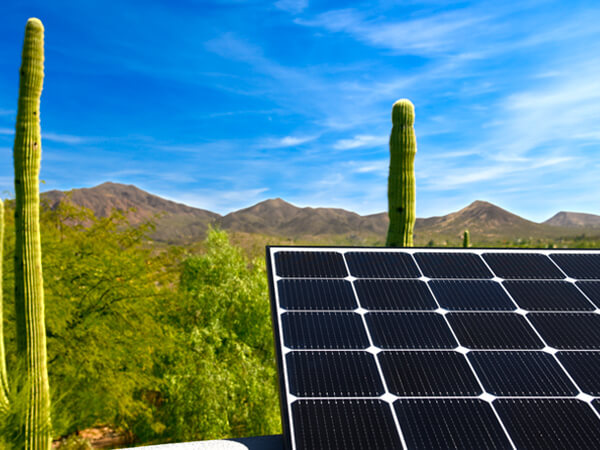
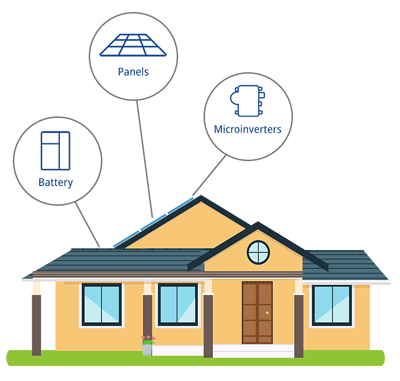
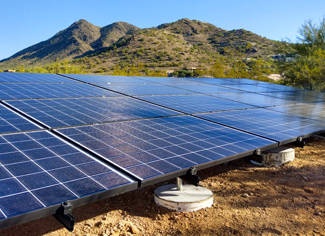
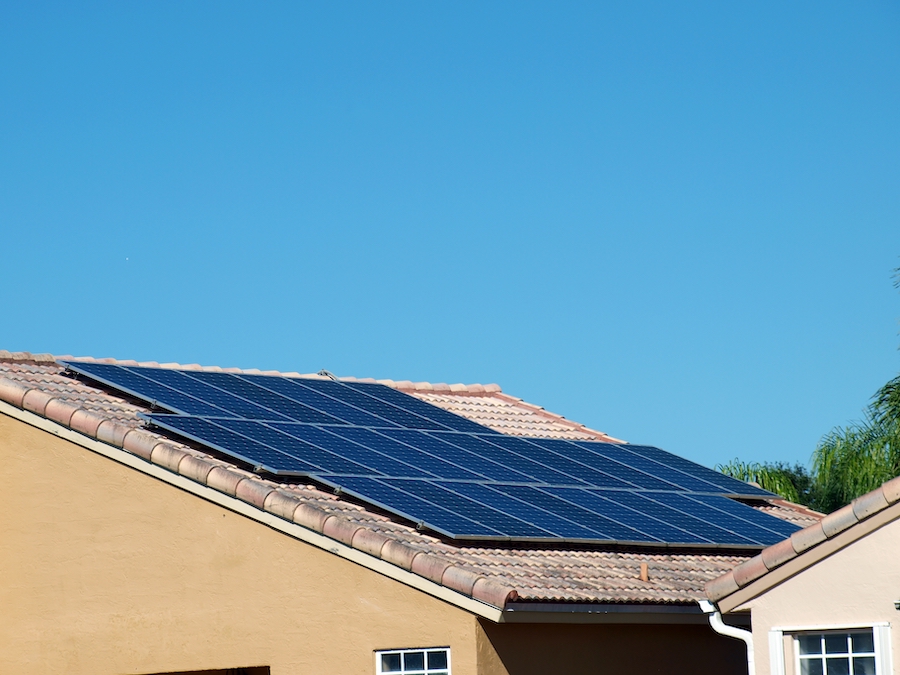
Solar electricity works exactly the same as the electricity you buy from the utility company. You turn on lights, plug in lamps and power appliances the same way you do right now. In fact, if you didn't see solar modules on the roof, you'd never notice any difference, except a lower electric bill. While the science of converting sunshine into electricity is complex, the idea is pretty simple. Solar electricity is generated by a group of solar modules called an array that's installed on your roof or in your yard. When sunlight falls on the solar modules, a DC electrical current is created instantly. The DC electricity is fed into an inverter that changes it to standard AC electricity, the same kind your home already uses.
You know that meter in your yard that tracks your electricity usage? The dial spins forward as you use electricity. How long and how fast it spins ultimately determines your bill. But did you know that it can spin in either direction? Whenever your solar electric system produces more electricity than you use, the surplus is channeled back to your utility's power grid, making your electric meter spin backwards. It's called net metering, and it means you're earning credits on your bill. Best of all, it means your electricity at that moment is free.
According to the American Solar Energy Society, the amount of sunlight hitting the earth in just one hour is enough to provide the world's energy needs for an entire year.
With that much potential, why isn't everyone using solar electricity?
How do I know if Solar will work on my home?
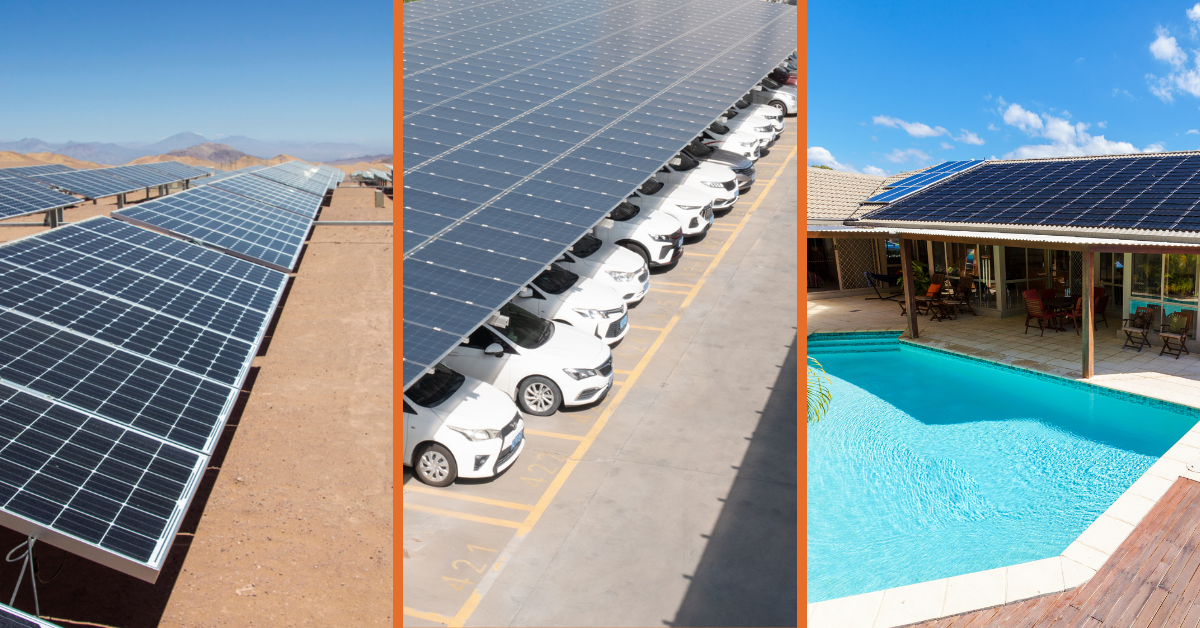
SouthFace Solar Electric offers more than one way to go solar. With so many options to choose from, we will help you to decide what's right for your home, family, and business. Much of the decision is based on the amount of roof space you have and which direction your home faces. South-facing roofs produce the highest annual output; however, east- and west-facing roofs can also harvest good results. It is important that your system will not be shaded by trees, buildings or other obstacles for long periods throughout the day.
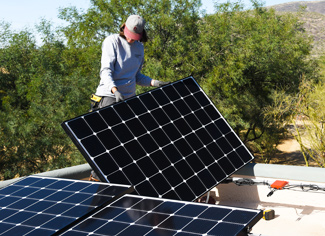
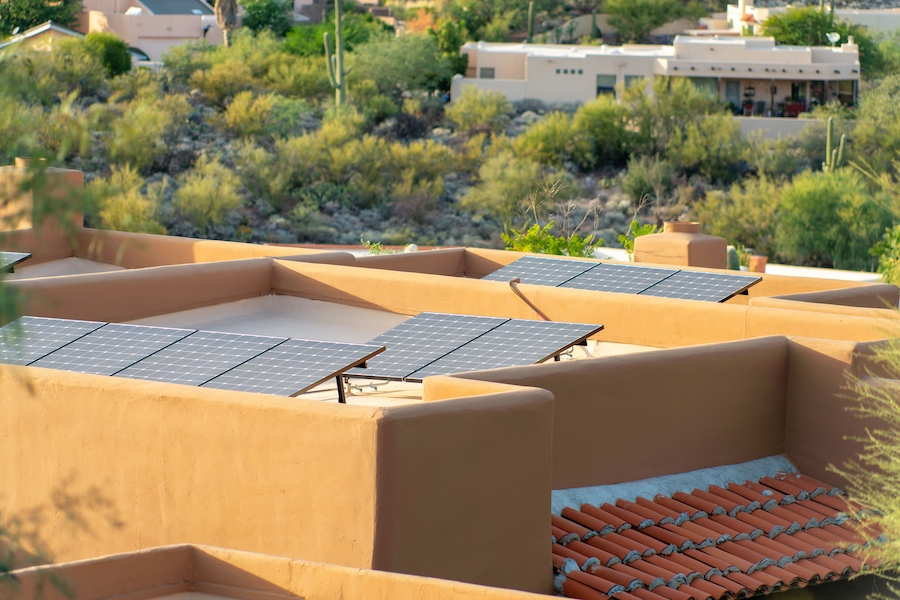
SouthFace Solar Electric will design a custom solar racking system to meet your electricity requirements and the specifications of your roof. The racking system will create a seamless appearance that integrates well on asphalt-shingle, flat-concrete tile, flat roof and curved Spanish tile roofs.
Does Solar work on cloudy days?
Yes, solar modules produce electricity on cloudy days, it is just less electricity. As a rule of thumb, if there is enough sunlight to cast a shadow, then solar panels can produce electricity. Of course, in areas where there is abundant sunshine "like Arizona" a smaller solar electricity system will provide as much power as a larger system located in Maine or Washington.
How much does Solar cost?
The cost of a system depends on a wide variety of factors including the type of roof, system complexity, mounting structure, system size and more. The federal government and state of Arizona offer rebates for purchasers of solar systems.
Solar modules are warranted to produce energy for 20-25 years. Over that time period, the cost of electricity from the utility continues to increase, while the solar system produces energy for free. Additionally, a solar electric system can increase a home's value by $20,000 for every $1,000 in reduced annual operating costs.
Are Solar modules dangerous?
All modules are UL 1703 certified and hold a Fire Rating of Class C. SouthFace Solar Electric also installs all modules according to every industry safety standard. Additionally, as an Arizona licensed contractor all systems will be inspected in accordance with any all applicable N.E.C. codes by city or county inspectors along with an inspection by the utility company before being activated to ensure safety.
How long does it take to install a Solar Electric system?
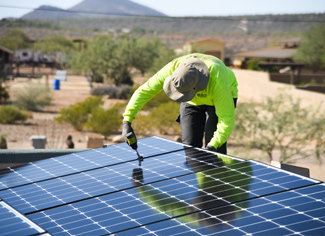
It only takes 3-5 days for the average residential rooftop system to be installed. One should expect 6-10 weeks for the entire process, which includes everything from a site evaluation to the switch being turned on.
Is there maintenance required to keep a Solar system operational?
Occasionally, a solar array should be cleaned with distilled water to clear the dust or debris that blocks sunlight and reduces efficiency. That is about all that's required. There are no moving parts to wear out and solar modules are covered under limited warranty for power output for 20-25 years. In fact, there are solar modules that have been installed 50 years ago that are still producing energy today. With a scheduled yearly service check and quarterly cleaning the life of your inverter and modules can be prolonged.
There are a lot of Solar products on the market: what products are a good fit for me?
SouthFace Solar Electric will listen to you the customer and answer any questions to help you understand your PV options by educating you about available products. We will then design and build the most functional solar system for your needs. This means you have an experienced solar partner you can trust.
The knowledge and experience of SouthFace Solar Electric will make converting your home to solar power more feasible and easier than you may have imagined. We are determined to continue on the path for improvement and made a commitment to setting new standards.
How do I get electricity at night? Can my Solar system store energy for use at night?
While sunlight is required for solar modules to create electricity, your home will draw power from the utility grid during night time hours. You can install a battery backup system for your home to use at night. This is known as "off-grid". While batteries are helpful during blackouts, this option is really only necessary for remote homes and cabins that are not connected to the utility grid.
Will a Solar installation ruin my roof? Or will it look unattractive?
SouthFace Solar Electric takes pride in designing and installing solar systems that are sleek and streamline. This ensures that the systems are fully aesthetic and reliable. It's clean, elegant appearance will blend beautifully with roof lines. We use Polyurethane caulking to ensure all roof penetrations will provide superior water protection.
How can I get an installation estimate?
Please click on the Contact link for more information. We are always ready to come to your home to determine your solar electric needs with a free consultation. All you have to do is contact us, we'll do the rest.
Where can I find more information on local and federal incentives to help me afford my system?
The federal government is supporting solar by offering great incentives for homeowners to switch to solar. Homeowners may claim a federal tax credit that is equal to 30% of their system cost. Here in Arizona our state offers a 10% tax credit capped at $1,000. Also there are Utility rebates: Arizona Public Service (APS) is offering $1.95 a DC watt installed capped at 50% of installed price. Salt River Project (SRP) is offering $2.15 per DC watt installed capped at $10,750.
How does using Solar electricity help the environment? Does Solar help offset climate change?
Coal-fired electrical power plants are responsible for 72% of all sulfur dioxide emissions in the U.S. On the other hand, solar electricity produces absolutely no pollution. One million homes going solar would result in a carbon dioxide emissions reduction of 4.3 million tons per year! That's the equivalent of removing 850,000 cars from the road. By using more solar electricity, fewer greenhouse gas-producing power plants need to be built. This is one major step to reducing climate change.
If there is an electrical black out, will I have power?
If you have a typical residential system, then you will lose power during a black out. This is due to safety precautions. Electrical workers need to know if electricity is running through power lines when working. If they believe there isn't electricity in the lines, because of the blackout, but your system is adding electricity to the grid, this could cause safety issues.
You can still produce electricity when there is a black out if you have a battery back up system. Batteries add a significant cost of the overall system. Installing a battery back up system is not necessary unless you are in an area with severe black out issues, or intend not to connect to the utility.
How big of a Solar Electric system do I need?
The size of your system depends on how much electricity your household uses on a regular basis. You can figure this out by looking at the last 12 months of electric usage in kilowatt hours (kWh) on your utility bills.
The most efficient use of your money is to offset your highest rates if you pay based on a tiered rate schedule. Instead of attempting to offset 100% your use, you may consider offsetting a portion of your consumption.
One of the main constraints for a system size is roof space. On average 10 watts take up 1 square foot. Therefore, a 4kW system would require approximately 400 square feet of roof space. You can also try a solar calculator.